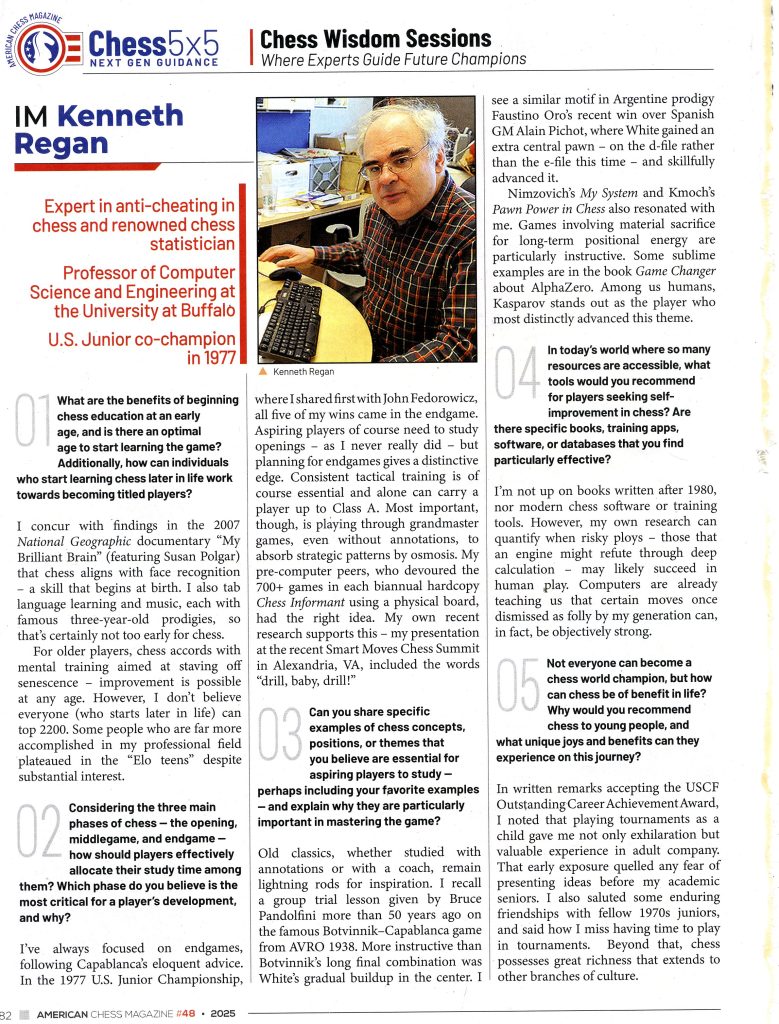
I found the information below in the Chess Wisdom Session of the American Chess Magazine [#48, 2025 page 82]. Answers from questions to IM Kenneth Regan [BTW, I highly recommend American Chess Magazine]:
“Considering the three main phases of chess — the opening, middlegame, and endgame — how should players effectively allocate their study time among them? Which phase do you believe is most critical for a player’s development and why?“
“I’ve always focused on endgames, following Capablanca’s eloquent advice. In the 1977 U.S. Junior Championship, where I shared first with John Fedorowicz. all five of my wins came in the endgame. Aspiring players of course need to study openings – as I never really did – but planning for endgames gives a distinct edge. Consistent tactical training is of course essential and alone can carry a player up to Class A. Most importantly, though, is playing through grandmaster games, even without annotations, to absorb strategic patterns by osmosis. My pre-computer peers, who devoured the 700+ games in each biannual hardcopy Chess Informant using as physical board, had the right idea. My own recent research supports this – my presentation at the recent Smart Moves Chess Summit in Alexandria, VA, included the words “drill, baby, drill!”